
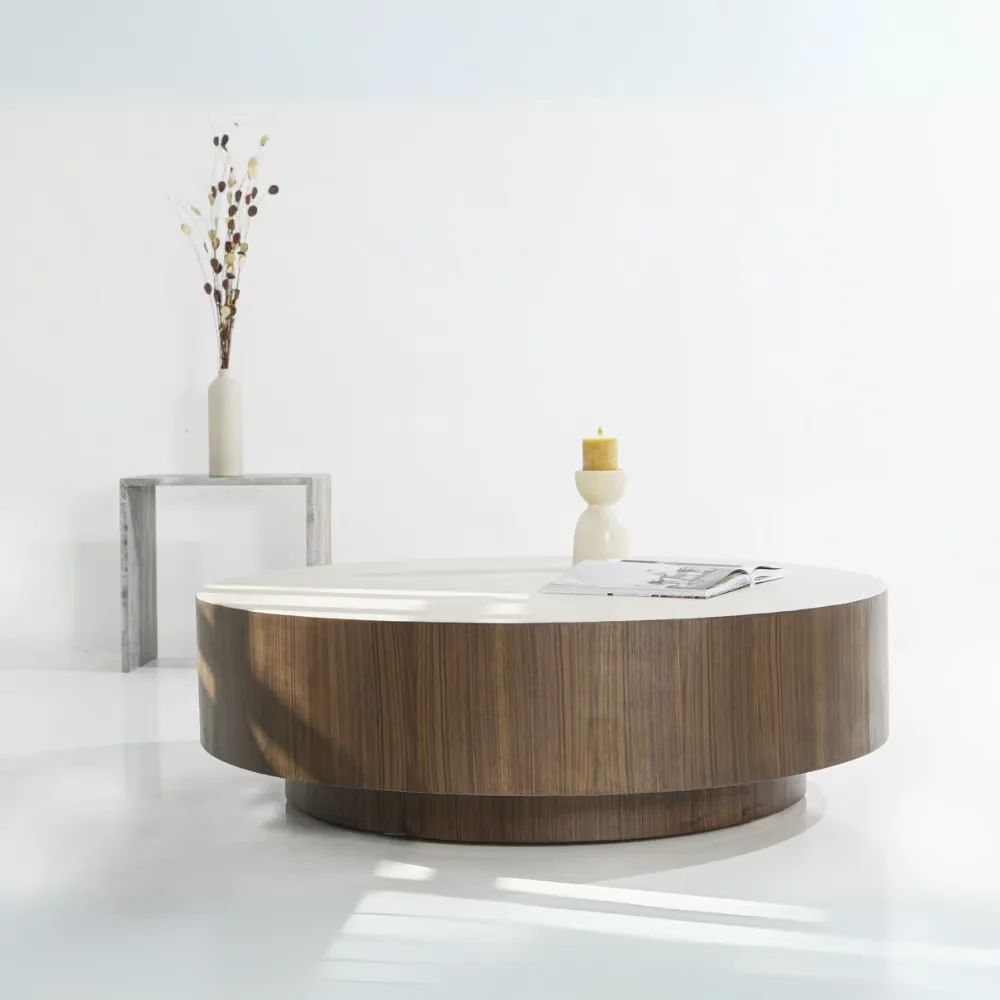
The choice between marble furniture and wooden furniture is often reduced to aesthetics, but in well-considered interiors, it goes far beyond visual preference. It is a decision shaped by material behavior, spatial intent, and the way a home is used over time.
Each material carries its own set of strengths, limitations, and design implications. From the structural presence of stone to the tactile warmth of timber, the comparison is not about superiority, but suitability. Understanding factors such as marble furniture durability, maintenance requirements, and long-term performance allows for a more informed, intentional selection.
Understanding the Materials: Permanence vs Adaptability
Marble Furniture
Marble is formed over centuries, and that sense of permanence is reflected in how it occupies space. Its natural veining, density, and cool surface quality give it a distinct visual authority. This is why luxury marble furniture is often used as a focal point – it does not recede into the background but establishes a clear spatial identity.
Beyond aesthetics, marble introduces a level of material clarity that few surfaces can replicate. It is precise, structured, and inherently architectural.
Wooden Furniture
In contrast, wooden furniture offers adaptability. It responds to its environment, both visually and physically. Grain patterns, tonal variations, and finishes allow wood to integrate across a wide range of interior styles.
Its warmth makes it inherently approachable. Where marble defines, wood complements. It supports the overall composition of a room without demanding attention, making it particularly effective in spaces designed for everyday living.
Aesthetic Impact: Visual Weight vs Material Warmth
The most immediate distinction between the two materials lies in how they shape the atmosphere of a space.
Marble furniture benefits include its ability to introduce contrast and structure. It anchors the room, often becoming the element around which other design decisions are made. In minimal or contemporary interiors, this quality is particularly valuable, as it eliminates the need for excessive styling.
On the other hand, wooden furniture benefits are rooted in its ability to soften a space. It absorbs light differently, introduces warmth, and creates a more relaxed visual environment. This makes it ideal for interiors that prioritize comfort and layering over contrast.
The choice, therefore, depends on whether the space requires definition or cohesion.
Durability & Longevity: Strength in Different Forms
Durability is often misunderstood when comparing these materials.
Marble furniture durability is defined by structural strength combined with surface sensitivity. While marble can last for decades without losing its form, it reacts to acidic substances and improper handling. Etching, staining, and surface dullness are not signs of weakness, but characteristics of a natural material that requires informed care.
In contrast, wooden furniture durability lies in its resilience and adaptability. Wood can absorb impact more effectively and is easier to repair. Scratches, dents, and wear can often be restored, allowing the piece to evolve over time rather than degrade.
In essence, marble offers permanence with precision, while wood offers longevity with flexibility.
Maintenance & Care: Discipline vs Ease
Maintenance is where the distinction becomes more practical.
When evaluating marble furniture pros and cons, care requirements play a central role. Marble demands a disciplined approach – regular sealing, immediate attention to spills, and the use of pH-neutral cleaning products. The reward, however, is a surface that retains its depth and clarity over time.
With wooden furniture pros and cons, maintenance is more forgiving. Routine cleaning, occasional polishing, and protection from excessive moisture are generally sufficient. While wood is sensitive to environmental conditions, it does not require the same level of precision in daily care.
This difference often becomes a deciding factor based on lifestyle and usage patterns.
Functionality & Everyday Living
The way furniture is used on a daily basis significantly influences material choice.
Marble performs best in settings where interaction is controlled. Coffee tables, consoles, and accent surfaces benefit from its presence without being subjected to constant wear. Its role is often visual as much as functional.
Wood, by contrast, is inherently suited to high-use environments. Dining tables, work desks, and storage units rely on the forgiving nature of wooden furniture. It accommodates movement, impact, and daily interaction without compromising usability.
Understanding this distinction ensures that the material supports the function rather than restricting it.
Cost & Value: Investment vs Versatility
From a cost perspective, marble typically represents a higher initial investment. This is especially true in the case of luxury marble furniture, where the quality of stone and craftsmanship directly influence the final piece. Its value lies in its longevity and the distinctiveness it brings to a space.
Wood offers a broader spectrum. Depending on the type of timber and finish, it can range from accessible to premium. This flexibility makes wooden furniture a practical choice for those seeking both quality and adaptability.
The decision, therefore, is not just about cost, but about how the material contributes to the long-term value of the space.
Design Flexibility: Statement vs Evolution
Marble has a defined visual identity. It works best in spaces where fewer elements are needed, allowing its natural variation to take precedence. This makes it ideal for interiors that prioritize clarity and structure.
Wood, on the other hand, evolves with the space. It can be restyled, refinished, and recontextualized over time. This adaptability makes it easier to update interiors without replacing foundational pieces.
In many cases, the most effective approach is not choosing one over the other, but understanding how each material contributes to the overall composition.
Marble vs Wooden Furniture: A Balanced Perspective
| Aspect | Marble Furniture | Wooden Furniture |
| Design Impact | Introduces structure, contrast, and a strong visual anchor | Brings warmth, flexibility, and ease of integration |
| Material Presence | Bold, defined, and architectural | Soft, organic, and adaptable |
| Durability | Strong and long-lasting with careful maintenance | Resilient, repairable, and suited for everyday use |
| Long-Term Behavior | Retains form and presence over time | Evolves with use, developing character and patina |
Which One Is Better? A Matter of Context
There is no universal answer to which material is better. The decision depends on how the space is used, the level of maintenance one is willing to commit to, and the desired aesthetic outcome.
Marble is suited to environments where precision, material clarity, and visual impact are priorities. Wood is better aligned with spaces that require comfort, adaptability, and frequent use.
In well-resolved interiors, both materials often coexist. Marble defines key focal points, while wood ensures the space remains grounded and livable.
Conclusion
The choice between marble and wood is less about superiority and more about how each material aligns with the intent of the space. Marble introduces structure, clarity, and a sense of permanence, making it ideal for interiors that rely on strong visual anchors. Wood, in contrast, offers warmth, flexibility, and a more adaptive presence, allowing spaces to feel layered and comfortable over time.
In well-considered interiors, the most compelling results often come from using both materials in balance. Marble defines and elevates, while wood softens and integrates, creating a composition that feels both refined and livable. When selected with purpose, each material contributes to a space that is not only aesthetically cohesive but also thoughtfully designed for everyday use.
Explore Lamac’s marble and wooden furniture collections. Designed with intent.
Leave a Comment
Your email address will not be published. Required fields are marked *