
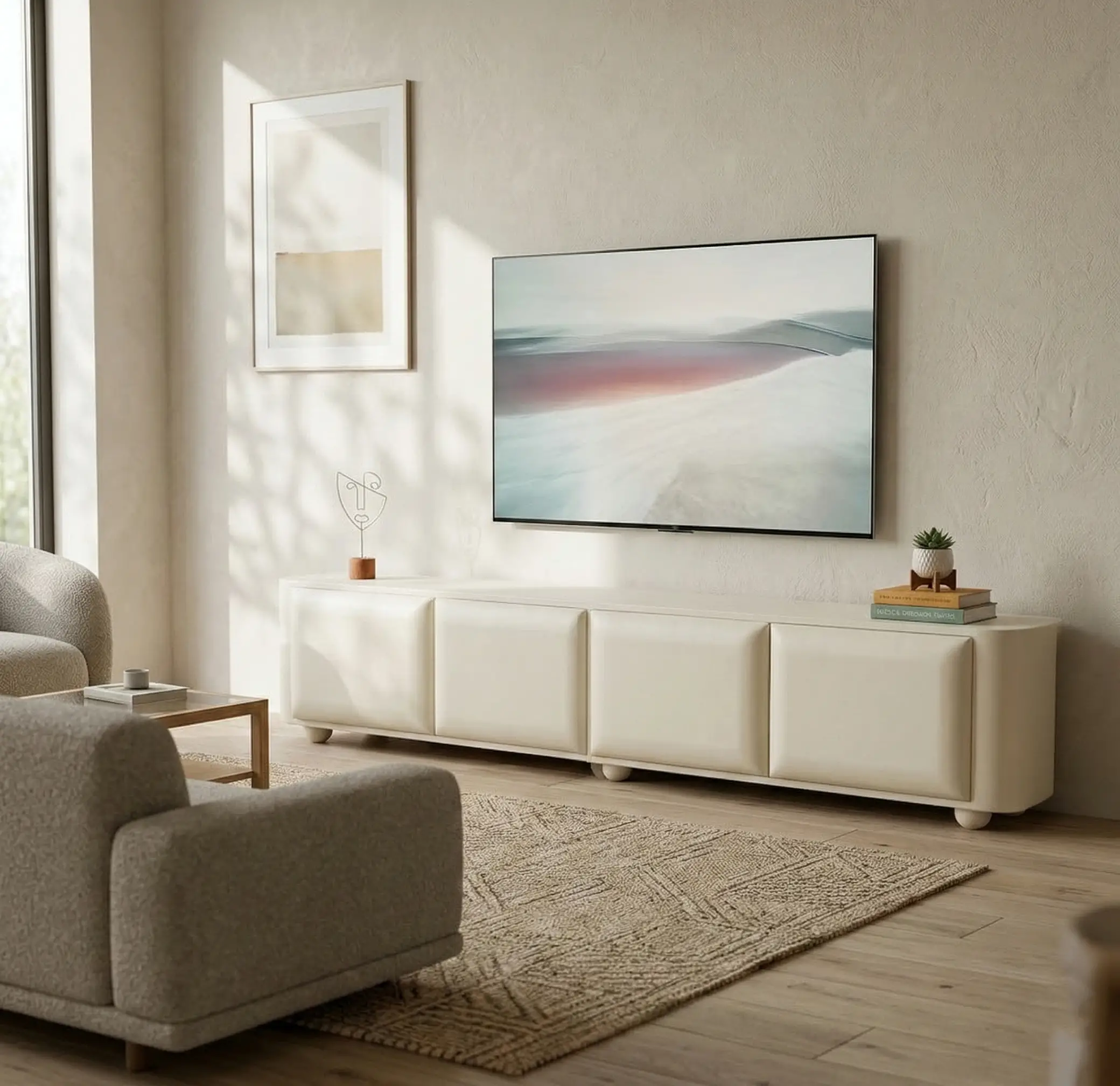
The TV unit is one of the most influential furniture pieces in a living room. Beyond housing your entertainment system, it anchors the TV wall, provides storage, and helps define the overall aesthetic of the space. Whether you’re designing a minimalist apartment or a spacious family home, choosing the right TV unit can significantly impact both functionality and visual appeal.
One of the most common design decisions homeowners face is choosing between a floating TV unit vs floor TV unit. While both serve the same purpose, they create very different impressions. Floating designs offer a clean, contemporary look that makes rooms feel lighter, while floor-standing units provide a stronger visual presence and greater storage capacity.
The best choice depends on your living room’s size, storage needs, interior style, and how you want the space to function. In this guide, we’ll compare both options, explore where each works best, and help you choose the best TV unit for your living room.
Floating TV Unit vs Floor TV Unit: Which One Is Better?
There isn’t a single answer to whether a floating or floor TV unit is better. The right option depends on your home, lifestyle, and design preferences.
A floating TV unit is mounted directly to the wall, leaving the floor underneath visible. This creates a streamlined appearance that suits contemporary interiors and gives the illusion of more space.
A floor TV unit, on the other hand, rests directly on the floor like a traditional media cabinet. It offers a grounded look with greater storage and works well as a statement furniture piece in larger living rooms.
Both options have distinct advantages:
- Floating TV units are ideal for minimalist homes, compact apartments, and contemporary interiors where clean lines and openness are priorities.
- Floor TV units are better suited to homeowners who require additional storage or want a more substantial piece of furniture that anchors the living room.
Rather than focusing solely on appearance, consider how the TV unit will fit into your daily routine and complement your existing furniture.
What to Consider Before Choosing a TV Unit
Before deciding between a wall-mounted or floor-standing design, it’s important to evaluate how the TV unit will function within your living room.
Living Room Size
The size of your room plays a major role in determining the most suitable TV unit.
Floating TV units visually expand smaller living rooms because they expose more floor area, making the space feel brighter and less crowded. They’re an excellent choice for apartments, compact homes, or open-plan layouts where maintaining visual openness is important.
Floor TV units tend to work better in medium to large living rooms where a more substantial furniture piece helps establish balance and proportion.
Rather than selecting the largest unit possible, choose one that complements the scale of your TV and surrounding furniture.
Storage Requirements
Think about what you need your TV unit to accommodate.
If you simply need a surface for media devices and a clean, uncluttered appearance, a floating design may be sufficient. However, if you need storage for gaming consoles, remotes, books, decorative accessories, or household essentials, a floor TV unit typically provides greater flexibility.
Closed storage is particularly valuable for maintaining a tidy living room, allowing cables and everyday items to remain hidden while preserving a refined aesthetic.
Visual Weight and Layout
Every furniture piece contributes visual weight to a room.
Floating TV units feel lighter because they don’t occupy floor space, making them ideal for interiors that embrace minimalism and simplicity.
Floor TV units naturally command more attention. Their larger presence can anchor expansive walls and create a balanced composition when paired with sizeable sofas, coffee tables, and statement lighting.
The goal is to ensure the TV unit complements, not overwhelms the overall layout.
Existing Furniture Style
Your TV unit should feel like part of a cohesive furniture collection rather than a standalone addition.
For example, if your living room features sculptural coffee tables, soft neutral upholstery, and clean architectural lines, a sleek floating TV unit will reinforce that contemporary aesthetic.
Alternatively, if your furniture incorporates rich wood finishes, layered textures, and statement pieces, a floor TV unit can provide the visual grounding needed to complete the space.
Coordinating materials, colours, and proportions across furniture creates a living room that feels intentional and well-designed.
Floating TV Unit vs Floor TV Unit: Side-by-Side Comparison
Both floating and floor TV units offer distinct advantages, but the right choice depends on your space, lifestyle, and storage requirements. Understanding how they compare across key factors makes it easier to select a design that complements both your living room and daily routine.
| Feature | Floating TV Unit | Floor TV Unit |
| Visual Appearance | Clean, minimalist, and contemporary | Strong, substantial, and furniture-like |
| Storage Capacity | Moderate storage for media essentials | Greater storage with multiple cabinets and drawers |
| Cleaning & Maintenance | Easy to clean underneath | Requires moving furniture to clean behind or underneath |
| Flexibility & Placement | Wall-mounted at a customised height | Easy to reposition without wall installation |
| Best For | Apartments, compact spaces, modern interiors | Larger living rooms, family homes, storage-focused spaces |
While floating TV units excel in creating openness and simplicity, floor TV units provide greater practicality for homeowners who need additional storage and a stronger visual anchor. The decision ultimately comes down to balancing aesthetics with functionality.
Luxury TV Units by Lamac
Floating TV Units by Lamac
Floating TV units create a clean, contemporary aesthetic by keeping the floor visible and reducing visual weight. Their wall-mounted design makes living rooms feel more open while maintaining a minimalist appearance. Lamac’s collection combines premium materials, refined craftsmanship, and functional storage to suit a variety of modern interiors.
Fleurina TV Unit
The Fleurina TV Unit features soft curves and a streamlined floating profile that adds elegance without overwhelming the space. Its clean design works beautifully in contemporary living rooms, creating a sophisticated focal point while maintaining an uncluttered aesthetic.
Samerra TV Unit
The Samerra TV Unit showcases clean geometry and understated detailing, making it an excellent choice for modern interiors. Its floating design keeps the room visually light while offering practical storage for media accessories and everyday essentials.
Umalya TV Unit
The Umalya TV Unit combines refined finishes with contemporary craftsmanship to create a premium entertainment unit. Its balanced proportions and minimalist design make it suitable for both compact apartments and spacious living rooms.
Floor TV Units by Lamac
Floor TV units remain a timeless choice for homeowners looking for additional storage and a stronger furniture presence. Their larger proportions help anchor the entertainment area while providing generous cabinet space to keep living rooms organized.
Aicha TV Unit
The Aicha TV Unit blends contemporary styling with practical functionality. Its spacious storage compartments make it ideal for organizing entertainment devices while creating a balanced focal point within the living room.
Jose TV Unit
The Jose TV Unit combines elegant proportions with generous storage, making it well suited for larger living spaces. Its refined finish complements both modern and classic interiors while maintaining a clean, organized appearance.
Walio TV Unit Console
The Walio TV Unit Console offers a sophisticated combination of premium craftsmanship and functional storage. Designed to make a statement, it brings structure and elegance to luxury living rooms while keeping media essentials neatly concealed.
Which TV Unit Works Best for Different Living Room Styles
Your TV unit should complement the overall design language of your home rather than stand apart from it. From minimalist apartments to luxurious family homes, different interior styles benefit from different TV unit designs.
Minimal Interiors
Minimalist living rooms prioritise simplicity, clean lines, and uncluttered surfaces. A floating TV unit naturally suits this aesthetic by keeping the floor visible and reducing visual bulk.
Pair it with neutral walls, streamlined furniture, and subtle décor to create a calm and balanced space.
Luxury Interiors
Luxury interiors often feature layered materials, sculptural furniture, and statement pieces that add depth and character.
A floor TV unit crafted with premium finishes such as marble or wood veneer introduces visual weight while anchoring the entertainment area. It also pairs beautifully with oversized sofas, elegant coffee tables, and decorative lighting.
Beige and Neutral Spaces
Neutral living rooms rely on texture rather than colour to create interest. Whether you choose a floating or floor-standing TV unit, opt for warm wood tones, stone finishes, or soft matte surfaces that complement the room’s natural palette.
Pairing the TV unit with travertine coffee tables and textured upholstery helps create a layered, inviting atmosphere.
Dark Interiors
Dark interiors benefit from TV units that provide subtle contrast without disrupting the room’s dramatic aesthetic.
A floating TV unit can make compact dark spaces feel more open, while a floor TV unit with marble or warm timber detailing adds richness and depth to larger rooms.
The key is to balance darker finishes with lighter materials and carefully placed lighting to maintain a sophisticated look.
How to Style a TV Unit Without Making It Look Cluttered
A beautifully designed TV unit can lose its impact if it’s overcrowded with accessories. Luxury interiors embrace restraint, allowing furniture and carefully selected décor to work together without competing for attention.
Pairing With Coffee Tables
A TV unit should feel connected to the rest of the living room rather than existing as a separate feature.
Choosing a coffee table in complementary materials creates visual continuity. For example, a travertine coffee table pairs beautifully with a marble TV unit, while warm wood finishes work well with timber cabinetry.
Adding Side Tables
Side tables help distribute visual weight throughout the room while adding practical surfaces for lighting, books, or decorative accents. Mixing materials such as stone and wood introduces subtle contrast without overwhelming the space.
Using Mirrors to Add Depth
Mirrors are particularly effective when positioned near a TV unit. They reflect natural light, enhance the perception of space, and soften the visual impact of larger furniture.
A statement mirror placed above a nearby console or opposite a window helps brighten the room while adding architectural interest.
Balancing Decorative Elements
When styling a TV unit, less is often more.
Choose a few carefully curated accessories, such as:
- A sculptural vase
- Stacked coffee table books
- A ceramic object
- A small indoor plant
- A table lamp
Leaving sections of the TV unit intentionally empty creates breathing room and allows each decorative piece to stand out.
Best Materials for TV Units
Material selection influences not only the appearance of a TV unit but also how well it integrates with the rest of your furniture. Premium materials add texture, warmth, and longevity, ensuring the TV unit remains a timeless feature within your living room.
Marble Finishes
Marble instantly elevates a TV unit, making it a striking focal point in luxury interiors.
Its natural veining adds movement and visual interest while reflecting light more effectively than darker solid finishes. Marble pairs particularly well with neutral colour palettes and contemporary furniture.
Wood Veneers
Wood veneers bring warmth and natural texture, making them one of the most versatile materials for TV units.
Oak, walnut, and similar finishes complement a wide range of interior styles, from Scandinavian-inspired spaces to modern luxury homes. Their timeless appeal also makes them easy to coordinate with coffee tables, sideboards, and shelving.
Mixed Material Designs
Combining wood, stone, and metal creates a layered aesthetic that feels sophisticated without becoming overly decorative.
Mixed-material TV units work especially well in contemporary interiors where subtle contrasts are preferred over bold colour combinations.
Matte vs. Gloss Finishes
Both finishes have their advantages.
- Matte finishes create a softer, understated look and are excellent for minimalist and earthy interiors.
- Gloss finishes reflect more light, adding brightness and a polished appearance to modern living rooms.
The choice depends on the overall mood of the space and the finishes used throughout the rest of the furniture.
Common TV Unit Mistakes Homeowners Make
A TV unit is often one of the largest pieces of furniture in a living room, so choosing the wrong one can affect both the appearance and functionality of the space. Avoiding these common mistakes will help you create a living room that feels balanced, organised, and visually cohesive.
Choosing Based Only on Appearance
A TV unit may look beautiful in a showroom, but it also needs to suit your lifestyle. Before making a decision, consider how much storage you need, where cables will be managed, and whether the unit complements your existing furniture. A well-designed TV unit should enhance both the aesthetics and practicality of your living room.
Ignoring Storage Needs
One of the biggest mistakes homeowners make is underestimating storage requirements. Media devices, gaming consoles, remotes, books, and everyday accessories can quickly create clutter if there isn’t enough concealed storage.
If you require more organisation, a floor TV unit with cabinets and drawers is often the better choice. For a cleaner, minimalist setup, a floating TV unit works well when storage needs are limited.
Selecting Incorrect Dimensions
A TV unit should always be proportionate to both the television and the room.
A unit that’s too small can make the TV appear oversized, while one that’s too large may dominate the living room. As a general rule, the TV unit should be wider than the television to create a balanced composition and provide enough surface area for decorative accents.
Overcrowding the TV Wall
Adding too many decorative items around the television can distract from the room’s overall design.
Instead of filling every available surface, keep styling minimal. A statement vase, a few books, or a sculptural object is often enough to add personality while allowing the TV unit itself to remain the focal point.
Conclusion
Choosing between a floating TV unit vs floor TV unit ultimately comes down to how you use your living room and the atmosphere you want to create. Floating TV units are ideal for homeowners seeking a clean, contemporary aesthetic with a greater sense of openness, while floor TV units provide additional storage and a stronger visual anchor for larger or more traditional spaces.
Whichever style you choose, the best TV unit is one that balances form and function. Paying attention to room size, storage requirements, materials, and supporting furniture ensures your entertainment area feels cohesive rather than crowded. Pairing your TV unit with complementary coffee tables, side tables, and carefully chosen décor further enhances the overall design, creating a living room that is both practical and elegant.
At Lamac, you will find a curated collection of floating and floor TV units crafted from premium materials and designed for modern living. Explore our range of modern TV unit designs, coffee tables, side tables, and luxury living room furniture to create a space that reflects your lifestyle with timeless sophistication.
Frequently Asked Questions
- Which type of TV unit is best for a modern living room?
Both floating and floor TV units work well in modern living rooms. Floating TV units suit minimalist and contemporary interiors by creating a clean, open look, while floor TV units are ideal for homeowners who want additional storage and a stronger furniture presence. - Should a TV unit be wider than the television?
Yes. Ideally, a TV unit should be wider than the television to create visual balance, provide space for decorative accessories, and ensure the entertainment area feels well proportioned. - How do I choose the right size TV unit for my living room?
Consider the size of your television, the available wall space, and the room layout. The TV unit should complement the scale of the room without overwhelming it or appearing too small. - What furniture pairs well with a TV unit?
Coffee tables, side tables, console tables, and accent chairs help create a cohesive living room. Choosing complementary materials and finishes ensures the TV unit blends seamlessly with the rest of the furniture. - Are wall-mounted TV units suitable for family homes?
Yes. Wall-mounted TV units are a practical option for family homes as they free up floor space, make cleaning easier, and create a streamlined appearance. However, homeowners with greater storage needs may prefer a floor-standing design. - What materials are best for luxury TV units?
Natural stone, marble, wood veneers, and mixed-material finishes are popular choices for luxury TV units. These materials offer durability, timeless appeal, and complement a wide range of modern interior styles.
Leave a Comment
Your email address will not be published. Required fields are marked *
You must be logged in to post a comment.