
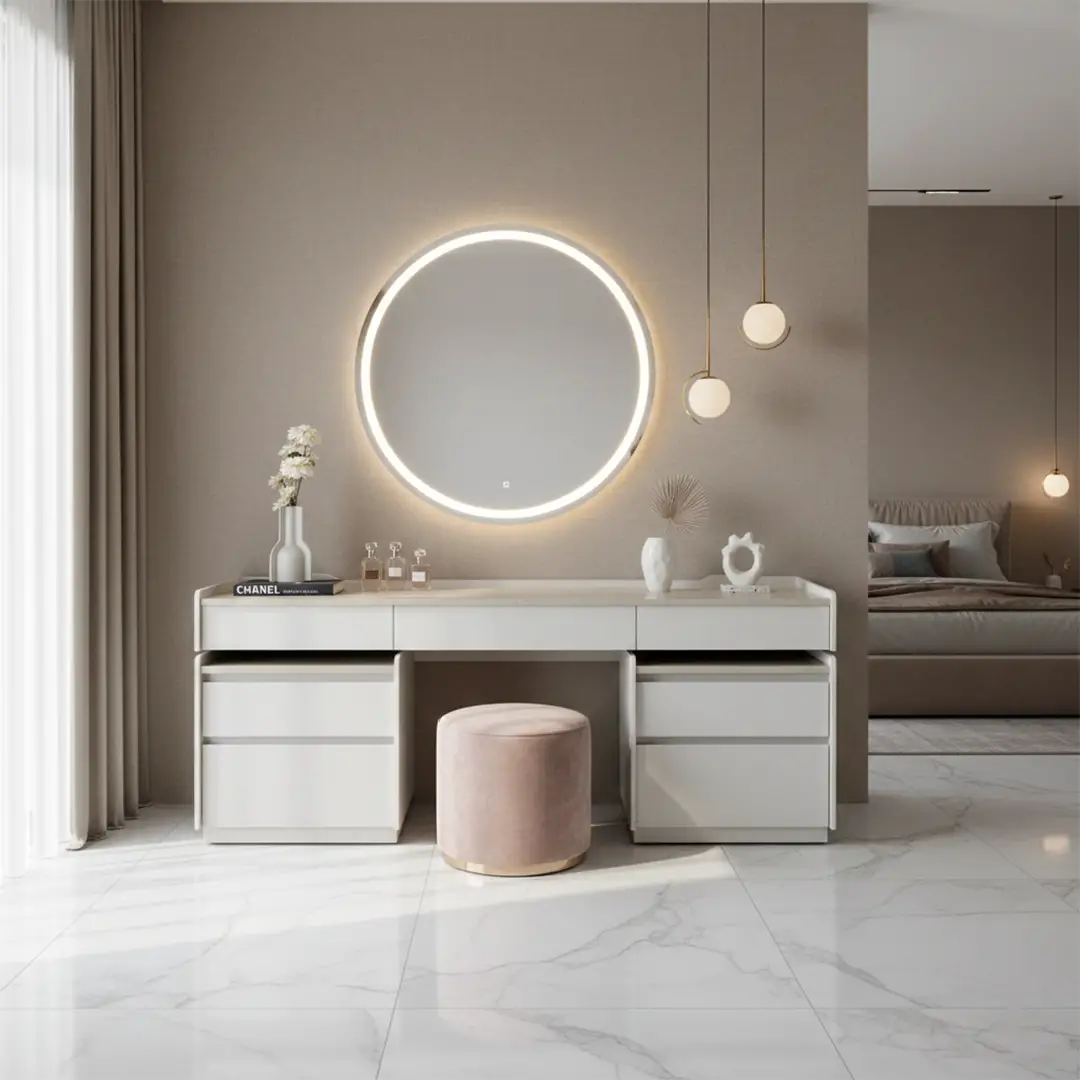
A dressing table can influence how balanced and cohesive a bedroom feels. While the bed usually occupies the most visual space, supporting furniture such as dressing tables, side tables, and mirrors helps complete the overall arrangement.
Choosing pieces that look coordinated does not mean buying an identical bedroom set. The better approach is to consider the bed’s style, proportions, materials, finishes, and visual weight before selecting a dressing table. This makes it easier to create a bedroom that feels considered while allowing individual furniture pieces to retain their character.
How Should a Dressing Table Match a Bed Design?
Matching bedroom furniture is primarily about creating visual harmony rather than finding furniture with identical designs. When considering how to choose a dressing table that matches your bed design, look at the relationship between the two pieces in terms of shape, scale, materials, and finish.
A heavily upholstered bed, for example, may work well with a dressing table featuring softer edges or refined detailing. A minimalist bed with a structured silhouette can be paired with a dressing table that has clean lines and restrained proportions.
The objective is to create a consistent design language across the bedroom. Colour, material, shape, and proportion can be repeated subtly so that the furniture feels connected without appearing overly coordinated.
Start With the Bed as the Main Character
Identifying the Bed Style
The bed is generally the largest and most prominent piece of bedroom furniture, making it a useful starting point for planning the rest of the room. Begin by identifying its defining characteristics.
An upholstered bed may introduce softness through fabric, padding, and rounded edges, while a contemporary wooden bed may rely on stronger lines. Understanding these characteristics helps narrow down suitable dressing table design ideas.
Understanding Visual Weight and Presence
Visual weight refers to how substantial a piece of furniture appears within a room. A tall, heavily upholstered bed can have considerably more visual presence than a slim platform bed.
The dressing table should complement this presence rather than compete with it. A substantial bed may require a dressing table with enough width or material presence to feel balanced, while a lighter bed can work with a more streamlined design.
Building Supporting Furniture Around It
Once the bed has established the primary design direction, consider how other furniture contributes to the overall composition. Side tables, benches, wardrobes, dressing tables, and mirrors should support the bed rather than create competing focal points.
This approach creates a more cohesive arrangement and provides a strong foundation for matching bedroom furniture across different styles.
Match Furniture Shapes Instead of Buying Identical Designs
Furniture does not have to come from the same collection to work well together. In many cases, repeating similar shapes or design characteristics creates a more refined result than using identical pieces.
Curved Beds With Softer Dressing Table Profiles
Curved or rounded beds can be paired with dressing tables featuring softened corners, rounded fronts, or curved detailing. Repeating this visual quality creates continuity without making the furniture look like a matching set.
This combination can work particularly well in bedrooms designed around soft upholstery, rounded accessories, and layered textures.
Structured Beds With Cleaner Furniture Lines
Beds with straight edges, geometric forms, or minimalist detailing generally work well with dressing tables that follow a similarly structured approach. Clean fronts, simple handles, and defined proportions can complement the architectural character of the bed.
For modern bedroom furniture, keeping the silhouettes related can create a more streamlined appearance.
Creating Consistency Without Matching Sets
Instead of searching for identical furniture, identify one or two characteristics that can be repeated. These might include a particular finish, metal detail, wood tone, or geometric element.
This creates bedroom furniture combinations that feel intentional while allowing each piece to have its own identity.
Coordinate Materials Across the Bedroom

Material selection can have as much influence on coordination as colour or shape. The goal is to establish relationships between materials rather than use exactly the same material throughout the room.
Upholstery and Soft Finishes
Upholstered beds introduce fabric and texture into the bedroom. A dressing table does not need to be upholstered to complement the bed, but its finish can echo the softness through rounded edges, subtle detailing, or complementary colours.
This approach works particularly well with upholstered beds, where the bed already provides a strong textural element.
Marble and Stone Details
Marble and stone can introduce a sense of permanence and visual sophistication. If the bed features marble detailing, a dressing table with a related stone surface or complementary finish can create continuity.
The veining, tone, and overall visual intensity should be considered so that the materials complement rather than compete with one another.
Wood and Warm Textures
Wood finishes can add warmth to bedrooms dominated by upholstery, stone, or metal. A wooden dressing table can balance a soft bed while introducing another layer of natural texture.
The wood tone does not necessarily need to be identical to other furniture. Closely related tones or complementary finishes can create a more layered appearance.
Mixing Materials Intentionally
Using different materials can make a bedroom feel more sophisticated when there is a clear relationship between them. For example, marble, wood, metal, and upholstery can coexist when their colours, proportions, and finishes are carefully balanced.
This is particularly useful when creating luxury bedroom interiors, where layering materials can provide depth without excessive decoration.
Choose the Right Dressing Table Size Based on Bed Proportions
Visual Balance Between Furniture Pieces
Size is an important part of dressing table matching bed design. A very small dressing table may feel disconnected from a large statement bed, while an oversized table can dominate a bedroom that already has substantial furniture.
Consider the width, height, and visual presence of the bed when selecting the dressing table. The goal is to create a relationship between the pieces rather than make them identical in scale.
Maintaining Comfortable Circulation
The dressing table should fit comfortably within the room’s circulation pattern. Allow enough space to sit, stand, open drawers, and move between furniture without creating obstructions.
This is especially important in smaller bedrooms where the placement of every piece affects how easily the space can be used.
Avoiding Furniture That Feels Oversized
Large furniture can make a bedroom feel crowded when several substantial pieces are placed close together. If the bed already has a large headboard or deep frame, a more streamlined dressing table may provide better balance.
Proportion should therefore be considered alongside available floor space when planning bedroom furniture combinations.
Pair Dressing Tables With Mirrors for a Cohesive Bedroom
Choosing Mirror Shapes Based on Bed Style
The mirror above or behind a dressing table can reinforce the design language established by the bed. Rounded mirrors can complement curved furniture, while rectangular or geometric mirrors can work well with structured bed designs.
A mirror can also introduce contrast when the rest of the room uses predominantly one type of silhouette.
Balancing Reflection and Scale
The mirror should be appropriately proportioned to the dressing table. A very small mirror may look disconnected from a wide table, while an oversized design can overwhelm the surrounding furniture.
Consider the wall area, ceiling height, and relationship between the mirror and dressing table before deciding on the final size.
Creating a Dedicated Dressing Zone
A dressing table and mirror can establish a clearly defined functional area within the bedroom. Positioning the setup where there is sufficient natural or artificial light can improve usability.
For bedrooms featuring luxury dressing tables, the mirror can also become an important decorative element that connects the dressing area with the wider bedroom design.
Conclusion
The right dressing table should make the bedroom work better as a whole. Consider how the bed influences the room’s proportions, then choose a dressing table that fits comfortably within the available space and supports your everyday routine.
Small design decisions can make a significant difference. A repeated material, a complementary shape, or a mirror with the right proportions can help connect different furniture pieces without making the bedroom feel overly coordinated.
When selecting luxury bedroom furniture, focus on how each piece contributes to the overall space rather than evaluating it individually. Explore Lamac’s range of luxury beds, luxury dressing tables, and bedroom mirrors to create a bedroom that feels well planned, functional, and visually connected.
FAQs
1. Should a dressing table match the bed?
A dressing table does not need to match the bed exactly. It should complement the bed through related proportions, materials, colours, shapes, or design details to create a cohesive bedroom.
2. How do you coordinate bedroom furniture?
Start with the bed as the main design anchor and select supporting pieces based on its visual weight, proportions, materials, and style. Repeating one or two design elements can help connect different furniture pieces.
3. What dressing table style works with upholstered beds?
Dressing tables with curved edges, soft profiles, refined finishes, or complementary materials can work well with upholstered beds. The choice should also consider the bed’s colour, scale, and overall design.
4. Can bedroom furniture have different finishes?
Yes. Different finishes can create a layered and sophisticated bedroom when they share complementary tones or materials. The key is to limit excessive variation and maintain a consistent overall design direction.
5. Where should a dressing table be placed?
A dressing table can be positioned near a wardrobe, along an available bedroom wall, or within a dedicated dressing area. It should have sufficient surrounding space for comfortable seating, movement, and access to storage.
6. How large should a dressing table be?
The ideal size depends on the available space, the bed’s proportions, and your storage requirements. Choose a design that provides enough surface and storage without overwhelming the room or restricting circulation.
Leave a Comment
Your email address will not be published. Required fields are marked *
You must be logged in to post a comment.