
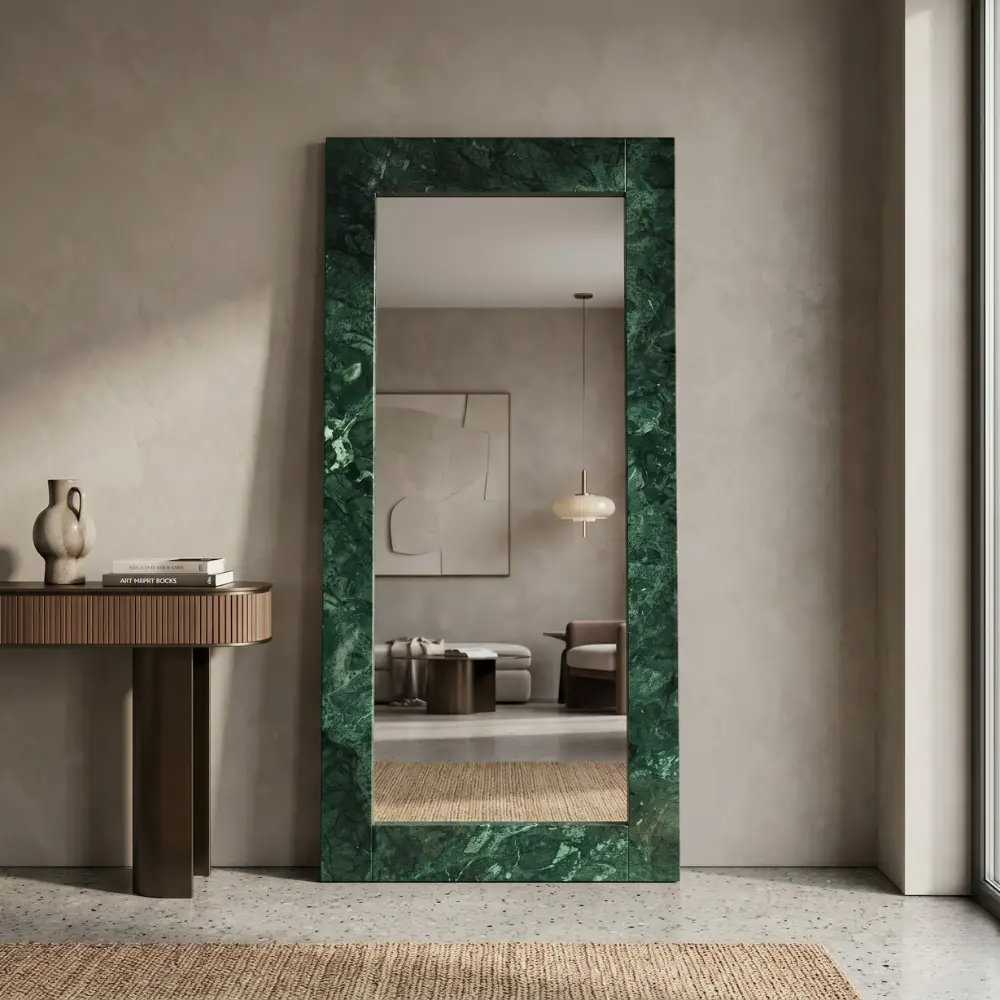
A mirror can change the way a room feels without changing its layout. Its shape can soften a wall, its frame can introduce a new material, and its position can draw attention to architectural details. This has changed the way mirrors are being considered in contemporary interiors. Instead of serving only as reflective surfaces, they are becoming design features in their own right.
In Dubai homes, where contemporary architecture often meets natural stone, premium furniture and understated colour palettes, statement mirrors offer another way to bring character into an interior. Marble frames, curved outlines and unusual silhouettes can introduce visual interest while complementing the wider aesthetic of luxury home decor in Dubai.
The Shift from Functional Mirrors to Statement Pieces
Traditionally, mirrors were selected mainly for their reflective purpose. Their size and placement were determined by practical requirements, with simple rectangular designs and minimal frames being common choices.
Today, mirrors are increasingly selected for how they contribute to a room’s appearance. A distinctive frame, an unusual outline or a full-length sculptural form can become a focal point, even when the surrounding decor remains minimal.
This shift has brought decorative wall mirrors into living rooms, entryways, dining areas and bedrooms. Rather than simply filling an empty wall, these designs help connect furniture, materials and architectural details. A carefully chosen mirror can become an integral part of the interior instead of an accessory added at the end.
What Makes a Mirror a Statement Piece?
A mirror’s visual impact comes from a combination of its shape, material, proportions and placement. These elements determine whether it blends into the background or becomes a defining feature of the room.
Shape and Silhouette
The outline is often the first detail that distinguishes statement mirrors from conventional designs. Round and oval mirrors introduce softer contours, while arched silhouettes bring an architectural quality. Irregular and asymmetrical forms create a more artistic appearance.
These shapes can be particularly effective in rooms dominated by straight lines, rectangular windows and angular furniture. Organic shaped mirrors introduce variation and soften the overall appearance without requiring additional decorative elements.
Materials and Frame Details
The frame can influence the entire character of a mirror. Marble introduces natural veining and tonal variation, while wood adds warmth. Metal frames create a more defined outline, and upholstered finishes bring texture to the design.
The choice of material also determines how easily the mirror relates to nearby furniture and interior finishes. A natural stone frame, for instance, can establish a visual connection with a marble console or travertine coffee table.
Scale and Placement
A full-length mirror can create a strong vertical feature, while a smaller wall mirror may work as an accent above a console or sideboard. Oversized designs need sufficient surrounding space to retain their visual impact.
The mirror’s position matters just as much as its dimensions. Its reflection should complement the room rather than draw attention to clutter or an uninteresting wall.
Why Marble-Framed and Sculptural Mirrors Suit Dubai Interiors
Contemporary Dubai homes often feature open layouts, large windows, clean architectural lines and carefully selected materials. Mirrors with distinctive frames and expressive shapes work well in these settings because they introduce visual contrast while complementing the existing design language.
Adding Character to Contemporary Architecture
Interiors with strong architectural lines can benefit from softer shapes and contrasting details. An arched or irregular mirror can break up a wall of rectangular elements, while a geometric design can reinforce the structure of a contemporary space.
The aim is to introduce a feature that complements the architecture rather than competes with it. This is one reason modern mirrors with distinctive outlines work particularly well in contemporary homes.
Bringing Natural Materials into the Interior
Natural materials play an important role in luxury interiors. Marble and travertine introduce individual surface patterns, while wood and metal add different textures and finishes.
Marble framed mirrors bring the character of natural stone to a reflective surface. Their veining and colour variations can relate to a stone console or coffee table, creating a material connection between the furniture and the wall.
Creating Visual Depth Through Reflection
A well-positioned mirror can reflect daylight from windows or capture the glow of carefully placed lighting. It can also draw attention to an attractive view, a furniture arrangement or an architectural detail.
The effect depends on what the mirror reflects. A considered position can create a greater sense of openness while making the reflected elements part of the room’s overall composition.
Making a Design Statement Without Adding More Furniture
A mirror can introduce height, texture and visual interest without requiring another cabinet, chair or decorative table. Wall-mounted designs make use of vertical space, while floor mirrors can create a strong feature along an otherwise empty wall.
This makes them a useful addition to interiors where the furniture arrangement needs to remain uncluttered while the walls still contribute to the overall design.
Marble-Framed vs Sculptural Mirrors: Two Distinct Design Approaches
Although marble-framed and sculptural designs can overlap, they bring different qualities to an interior. Understanding these differences can make it easier to choose a mirror that suits the room.
Marble-Framed Mirrors: Natural Texture and Architectural Presence
Marble framed mirrors combine the reflective quality of glass with the natural character of stone. Their appeal comes from the veining, colour variations and substantial appearance of the frame.
A marble frame can give even a simple mirror shape a distinctive presence. It works particularly well in contemporary, minimalist and modern luxury interiors, where natural materials provide detail without the need for elaborate decoration.
Marble mirrors also complement stone furniture and architectural finishes. However, repeating the same marble finish across every surface can make the room feel overly coordinated. Pairing the mirror with wood, metal or textured upholstery creates more visual variation.
Sculptural Mirrors: Expressive Shapes and Artistic Detail
Sculptural mirrors place greater emphasis on form. Their defining features may include irregular outlines, asymmetrical proportions, curved profiles or distinctive frame treatments.
These designs can be particularly effective in understated interiors. An unusual outline gives the mirror an artistic quality, allowing it to stand out without requiring an elaborate arrangement around it. Sculptural wall mirrors can also introduce movement into spaces with predominantly straight architectural lines.
How to Choose Between the Two
The choice depends on what the room needs. A marble-framed mirror is suitable when natural stone and material continuity are important to the interior. A sculptural design is a strong option when the aim is to introduce an expressive shape or an artistic feature.
Both can work with understated furniture, provided their proportions and finishes relate to the surrounding space.
Where to Use Statement Mirrors in a Luxury Home
The same mirror can create different effects depending on where it is placed. Consider the furniture arrangement, available wall space and the view it will reflect before deciding on its position.
Entryways and Foyers
An entryway is an ideal place for a distinctive mirror. Pairing an arched or full-length design with a console table creates a defined entrance and introduces the home’s interior style from the moment someone walks in.
A marble-framed mirror can relate to a stone console, while a curved silhouette can add interest to a simpler furniture arrangement.
Living Rooms
In living areas, mirrors can complement coffee tables, lounge chairs and side tables. A sculptural design placed near a seating arrangement can connect visually with the furniture, especially when its shape contrasts with the room’s more structured elements.
Avoid positioning a mirror simply to fill an empty wall. Consider what it reflects and how it relates to the rest of the room.
Dining Areas
A large mirror can reflect dining furniture, pendant lighting and stone finishes, bringing additional depth to the setting. Positioning it where it captures an appealing view of the dining area can make the space feel more connected.
Bedrooms and Dressing Areas
Full-length mirrors are particularly useful near wardrobes and dressing tables. An arched marble mirror can introduce an architectural detail, while a softer sculptural design can complement upholstered furniture and neutral finishes.
Hallways and Transitional Spaces
Hallways often have limited furniture and long stretches of empty wall. A distinctive mirror can give one of these areas a clear design purpose. Choose a size that suits the available wall space and allows the outline to remain visible.
How to Style Statement Mirrors Without Overdecorating
A distinctive mirror can hold attention on its own. The surrounding styling should support its design rather than compete with it.
- Match the mirror’s proportions to the wall: Leave enough surrounding space for the frame and silhouette to remain visible.
- Pair organic outlines with clean-lined furniture: This creates contrast and allows the mirror’s shape to stand out.
- Use marble as an accent: If the mirror has a marble frame, introduce other materials rather than repeating the same stone finish everywhere.
- Repeat materials, not identical shapes: A shared wood, metal or stone finish can connect different pieces without making the room look repetitive.
- Consider the reflection: Check what the mirror will show from the main viewing positions in the room.
- Pay attention to lighting: Position the mirror to capture useful reflections without creating uncomfortable glare.
- Leave negative space: Avoid crowding distinctive designs with too many accessories.
Statement Mirror Designs at Lamac
The choice between a marble-framed mirror and a sculptural design often comes down to the kind of character you want to introduce into a room. Lamac’s collection of designer mirrors brings together different approaches through natural stone, architectural outlines and expressive shapes.
-
Aurelia Arch Mirror
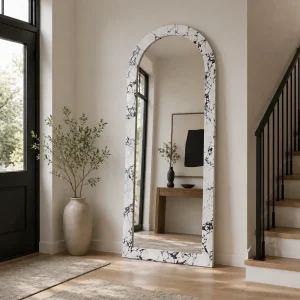
The Aurelia Arch Mirror combines a full-length design with a graceful arched silhouette and a genuine natural marble frame. Available in different marble options, including Black, Burgundy, Calacatta Viola, Green and White, it brings together architectural form and the natural variations of stone. Its floor-leaning design makes it suitable for bedrooms, entryways, dressing areas and living rooms.
-
Axis Mirror
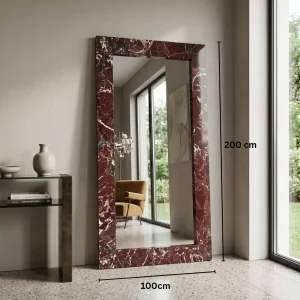
The Axis Mirror takes a more structured approach with its rectangular form and substantial natural marble frame. Its clean outline creates a contrast with the natural veining and tonal variations of the stone. Available in multiple marble finishes and sizes, it can complement contemporary living spaces, hallways and dressing areas.
-
Lana Floor Mirror
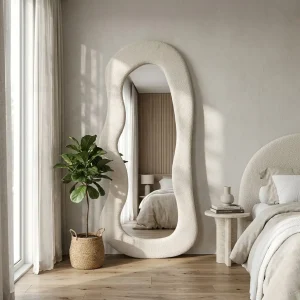
The Lana Floor Mirror brings a softer, more expressive character through its curvy silhouette and off-white boucle-upholstered frame. Its textured finish introduces another dimension to the design, making it a distinctive addition to neutral and contemporary interiors. It can be leaned against a wall or wall-mounted.
These designs can be considered alongside Lamac’s wider range of Marble Furniture, Travertine Furniture, Coffee Tables, Lounge Chairs, Side Tables and Console Tables. Pairing different materials and forms allows the mirror to connect with the furniture without making every element look identical.
Conclusion
A well-chosen mirror can change the character of a room through its shape, frame and placement. Marble-framed designs bring the natural beauty of stone into the interior, while sculptural silhouettes add movement and soften the straight lines of contemporary architecture. These details make statement mirrors an important part of modern interiors, giving walls a distinct identity without adding visual clutter.
When choosing a mirror, consider how its design will connect with the furniture, finishes and proportions of the space. At Lamac, designs such as the Aurelia Arch Mirror, Axis Mirror and Lana Floor Mirror offer different ways to bring this character into your home. The right piece should feel connected to its surroundings while still having a presence of its own.
FAQs
- How do statement mirrors differ from regular wall mirrors?
Statement mirrors have distinctive shapes, frames, materials or proportions that make them decorative features within a room. Regular wall mirrors generally focus on reflection, while statement designs also contribute to the interior’s visual character.
- Are marble-framed mirrors a good choice for contemporary interiors?
Yes. Marble-framed mirrors complement contemporary interiors through their natural veining, varied colours and distinctive frames. They pair well with stone furniture, neutral palettes, wood and metal accents.
- Which mirror shapes are popular in luxury homes?
Arched, round, oval, asymmetrical and organic shapes are popular choices. Each creates a different effect, from the architectural character of an arch to the softer appearance of curved and irregular outlines.
- Where should you place a statement mirror in a living room?
A statement mirror can be placed above a console, beside a seating arrangement or on a prominent wall. Position it to reflect natural light, an attractive view or a carefully arranged part of the room.
- Can a floor mirror be wall-mounted?
Some floor mirrors are designed to support both leaning and wall-mounted installation. Always check the product’s specifications and recommended mounting method before installation.
- How do you choose the right size statement mirror?
Consider the dimensions of the wall, ceiling height and nearby furniture. A large mirror can anchor a spacious wall, while a smaller design may work better above a console or in a narrow hallway.
- Do statement mirrors make small rooms look bigger?
Mirrors can create a greater sense of space by reflecting light and parts of the room. For smaller interiors, choose a proportionate design and position it to reflect an open or visually appealing area.
- How can you style a sculptural mirror with existing furniture?
Pair its shape with simpler furniture so the mirror remains a focal point. You can connect it to the room through shared materials, colours or finishes without matching every detail.
- What should you consider when buying luxury mirrors in Dubai?
Look at the mirror’s dimensions, frame material, finish, installation requirements and suitability for the intended space. Its design should complement the existing furniture and interior finishes.
Leave a Comment
Your email address will not be published. Required fields are marked *
You must be logged in to post a comment.