
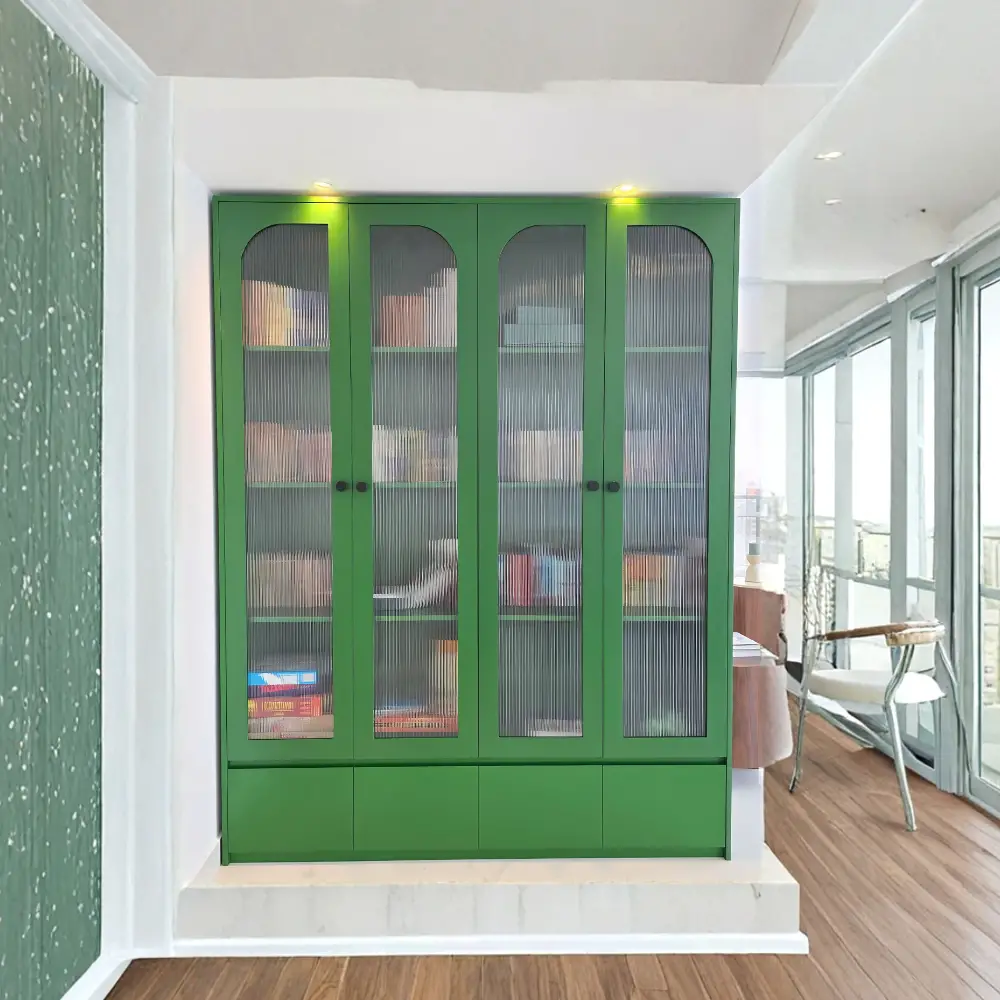
A bookshelf can do much more than hold a collection of books. It can bring structure to an empty wall, create a display for personal objects and introduce another layer of design to a room. In a home office, it helps keep reading material and work essentials organised. In a living room, it can become a focal point that reflects the homeowner’s interests and complements the surrounding furniture.
Choosing the right piece involves more than finding a design that looks appealing. Its dimensions, storage capacity, materials and shelf arrangement all influence how well it fits into a space. For Dubai homes, where contemporary interiors often feature considered furniture arrangements and distinctive finishes, the right bookshelf can combine storage with a strong visual presence.
What to Consider Before Choosing a Bookshelf
Before exploring different bookshelf design ideas, consider the room, the items you need to store and how the furniture will fit into your existing interior.
Room Size and Available Space
Start by measuring the wall or floor area where the bookshelf will be placed. Consider its height, width and depth, along with the space needed to move comfortably around it.
Tall, narrow designs can make use of vertical space, while wider units can accommodate larger collections and create a stronger presence along an empty wall. In compact rooms, a wall-mounted or visually open design may help keep the floor area clear. In larger interiors, a full-height bookcase can establish a more defined feature.
Storage Requirements
Think about what the shelves will hold. A collection of large-format books needs different shelf proportions from smaller paperbacks. A home office may also require room for folders, reference material and work accessories, while a living room bookshelf might hold books alongside ceramics, framed photographs and decorative objects.
If you need to store items of different sizes, look for varied shelf heights or a combination of open and enclosed sections. This makes the unit more adaptable to everyday use. The right book storage furniture should accommodate your collection without making the room feel crowded.
Material and Finish
Material has a significant influence on the appearance of a bookshelf. Wood introduces warmth and works well with natural textures, neutral palettes and other wooden furniture. Metal can create a more defined, architectural look, while glass-fronted designs offer a lighter display effect.
A wooden bookshelf can complement interiors with timber flooring, wooden consoles or warm-toned furniture. For a more distinctive look, consider combining materials or choosing a finish that creates contrast with the surrounding walls.
Design and Proportions
The bookshelf should relate to the scale and style of the room. A large, elaborate unit can overwhelm a compact space, while a very small design may appear out of place against a wide wall.
Consider the shape of the shelves, the spacing between sections and the overall silhouette. These details influence whether the piece blends into the room or becomes a feature in its own right. A considered luxury bookshelf design should complement the interior while meeting its storage requirements.
Choosing a Bookshelf for a Home Office
A home office bookshelf should make frequently used material easy to find while keeping the workspace organised. Books, files, notebooks and reference documents need accessible storage, but the unit should also fit comfortably alongside the desk and other office furniture.
When choosing a bookshelf for home office use, consider:
- Accessibility: Keep frequently used books and files on shelves that are easy to reach.
- Shelf dimensions: Check that the shelves can accommodate folders, larger books and storage boxes.
- Open and enclosed storage: Use open sections for regularly accessed material and cabinets for items you prefer to keep out of sight.
- Placement: Position the unit along an available wall or near the desk without obstructing movement.
- Visual organisation: Leave room for a few personal objects or framed photographs to make the workspace feel considered.
A well-chosen unit can also help define the work area in a multipurpose room, giving books and office essentials a dedicated place.
Choosing a Bookshelf for a Living Room
In a living room, a living room bookshelf often serves two purposes: storage and display. It can hold books and personal collections while contributing to the room’s overall composition. Its design should relate to nearby seating, side tables, consoles and other furniture.
A bookshelf for living room use can be styled with a combination of books, decorative objects, small sculptures and framed photographs. The arrangement should feel connected to the room without making every shelf look identical.
Open shelving works well when you want displayed objects to remain visible. A glass-fronted bookcase offers a more contained arrangement, particularly for collections that need some protection from dust. For larger living areas, a tall bookcase can draw the eye upwards and make an otherwise plain wall more distinctive.
Bookshelf Design Ideas for Contemporary Dubai Homes
The right design can change how a bookshelf contributes to an interior. Here are a few styles worth considering when exploring modern bookshelves and a contemporary bookcase for your home.
Open and Minimal Shelving
Open shelves keep the structure visually light and allow books and decorative objects to become part of the room’s display. They work well in home offices, living rooms and spaces where a closed cabinet might feel too heavy.
Sculptural and Curved Designs
Bookshelves with curved lines or unusual shelf arrangements can bring movement to an interior dominated by straight edges. These designs are particularly suited to understated rooms where one distinctive furniture piece can introduce character.
Wooden Bookcases
Wooden designs bring natural warmth and can complement a range of interior styles. Depending on the finish, they can work with both contemporary and more traditional furniture arrangements.
Glass-Fronted Cabinets
A glass-fronted cabinet offers a different approach to book storage. Fluted glass, in particular, softens the view of the contents while allowing their outlines to remain visible. It can be a suitable choice for displaying books and selected objects while keeping the arrangement visually contained.
Full-Height Bookcases
A tall unit can make use of vertical space and create a strong feature along a large wall. Before choosing one, check the ceiling height, available width and ease of access to the upper shelves.
These styles offer different directions for modern bookcase design, depending on the room’s proportions and the kind of display or storage you need. They also offer inspiration for homeowners considering designer bookcases for contemporary interiors.
Bookshelf and Bookcase Designs at Lamac
Lamac’s collection includes different approaches to shelving and display, from wooden storage to sculptural open designs and glass-fronted cabinets. Each piece brings a distinct look to a home office or living room.
Oli Bookshelf
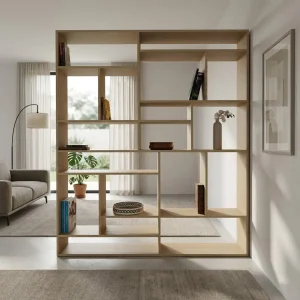
The Oli Bookshelf is crafted from premium wood and offers a versatile storage option for living rooms, offices and bedrooms. Its design can accommodate books and decorative objects, while customisable sizing allows it to be considered for different spaces. Available in finishes including Black Ash Wood, Dark Burgundy, Walnut and White Oak, it can complement a range of furniture palettes.
Emerao Fluted Glass Cabinet
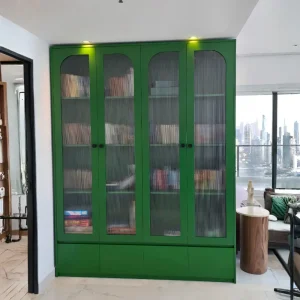
The Emerao Fluted Glass Cabinet takes a more enclosed approach to storage. Its vertically fluted glass panels create texture and soften the visibility of the contents, making it suitable for displaying books, collectibles and selected decorative pieces. The green finish and black metal knobs give it a distinctive presence, while its full-height structure offers substantial internal shelving.
Folium Bookshelf
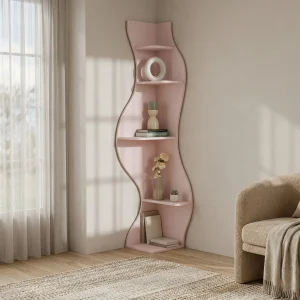
With its fluid, organic silhouette, the Folium Bookshelf brings a sculptural quality to storage. Its curved form creates a different visual rhythm from conventional rectangular shelving, while its range of colour options allows it to complement different interior palettes. It can hold books, artwork and decorative objects in a living room or home office.
Arco Bookshelf
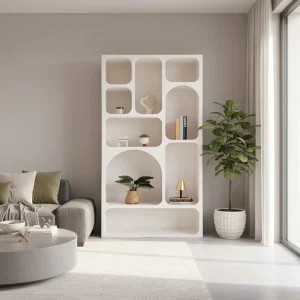
The Arco Bookshelf features open curved shelves and a textured white finish. Its sculptural arrangement gives books and decorative accessories a distinctive display setting. Measuring 100 × 40 × 200 cm, it offers vertical storage while maintaining a defined footprint, making it an option for contemporary living and study spaces.
Together, these designs show how luxury bookshelves and display cabinets can serve different purposes within an interior. For homeowners exploring premium bookshelves in Dubai, the choice can come down to the amount of storage required and whether the preferred look is open, enclosed, wooden or sculptural. Those looking for a designer bookshelf in Dubai can also consider how the piece’s materials and proportions relate to the rest of their furniture. Lamac’s collection forms part of its wider range of luxury furniture in Dubai.
How to Style a Bookshelf Without Making It Look Cluttered
Even a well-chosen bookshelf can look overcrowded if every shelf is filled. A considered arrangement gives books and decorative objects room to stand out.
- Vary the arrangement of books: Place some books vertically and stack others horizontally to create changes in height.
- Leave some open space: Empty sections help the display feel less crowded and give individual objects more presence.
- Combine books with decorative pieces: Ceramics, framed photographs and small sculptures can break up rows of book spines.
- Work with a consistent palette: Choose colours that relate to the room, then introduce a few contrasting details.
- Consider scale: Place larger objects on wider shelves and smaller accessories where they can be seen clearly.
- Keep everyday items accessible: In a home office, avoid placing frequently used files or books behind decorative objects.
The aim is to create a display that feels personal and organised, rather than arranging every shelf to look the same.
How to Choose the Right Bookshelf for Your Home
Before making a final decision, consider how the piece will function in the room over time. A few checks can help narrow down the options:
- Measure the available wall and floor space.
- List the books, files and objects you intend to store.
- Decide whether open shelves or enclosed compartments are more suitable.
- Check shelf depth and spacing against the items you own.
- Choose a material and finish that relate to the existing furniture.
- Consider how the unit will look from different parts of the room.
- Check installation and access requirements, particularly for tall or wall-mounted designs.
A luxury bookcase should feel appropriate to the room in both scale and appearance. The most suitable choice is one that accommodates your collection while contributing to the interior as a whole.
Conclusion
The right bookshelf can bring order to a collection while giving an interior another point of interest. In a home office, it helps organise books and work essentials; in a living room, it can become a display for personal objects and carefully chosen accessories. The choice of material, shelf arrangement and overall proportions determines how naturally it fits into the space.
When selecting a bookshelf or bookcase, consider how you want to use it and how it will relate to the furniture already in the room. Lamac’s range includes wooden, open and glass-fronted designs, along with sculptural silhouettes that bring a distinct character to contemporary interiors. A well-chosen piece should make room for the things you value while feeling like a natural part of your home.
FAQs
- What is the difference between a bookshelf and a bookcase?
A bookshelf usually refers to open shelving where books and objects are displayed. A bookcase can include open shelves as well as enclosed sections or glass doors for more contained storage.
- How do I choose the right bookshelf for my living room?
Consider the available wall space, the size of your book collection and the surrounding furniture. Choose a design that offers enough storage while complementing the room’s materials, colours and proportions.
- What type of bookshelf is best for a home office?
A home office benefits from shelving with accessible compartments for books, files and reference material. A combination of open shelves and enclosed storage can help keep frequently used items within reach while maintaining an organised workspace.
- Are open bookshelves better than closed bookcases?
Open bookshelves make books and decorative objects easy to access and display. Closed bookcases help protect contents from dust and keep selected items out of sight. The better option depends on your storage needs and preferred interior style.
- How do I choose the right bookshelf size?
Measure the available area and consider the height, width and depth of the unit. Check the dimensions of the books and objects you plan to store, and leave enough space around the bookshelf for comfortable movement.
- What materials are suitable for luxury bookshelves?
Wood, metal and glass are common choices for premium shelving. Wood introduces warmth, metal adds structure, and glass creates a lighter display effect. The right material depends on the room’s existing finishes and overall design.
- How do you style a modern bookshelf?
Arrange books in a mix of vertical and horizontal stacks, then add a few decorative objects in different sizes. Keep some shelves partially open and use colours that complement the surrounding interior.
- Can a bookcase be used to display decorative accessories?
Yes. Bookcases can display ceramics, framed photographs, small sculptures, collectibles and other personal objects alongside books. Open shelving and glass-fronted cabinets are particularly suited to this purpose.
Leave a Comment
Your email address will not be published. Required fields are marked *
You must be logged in to post a comment.