
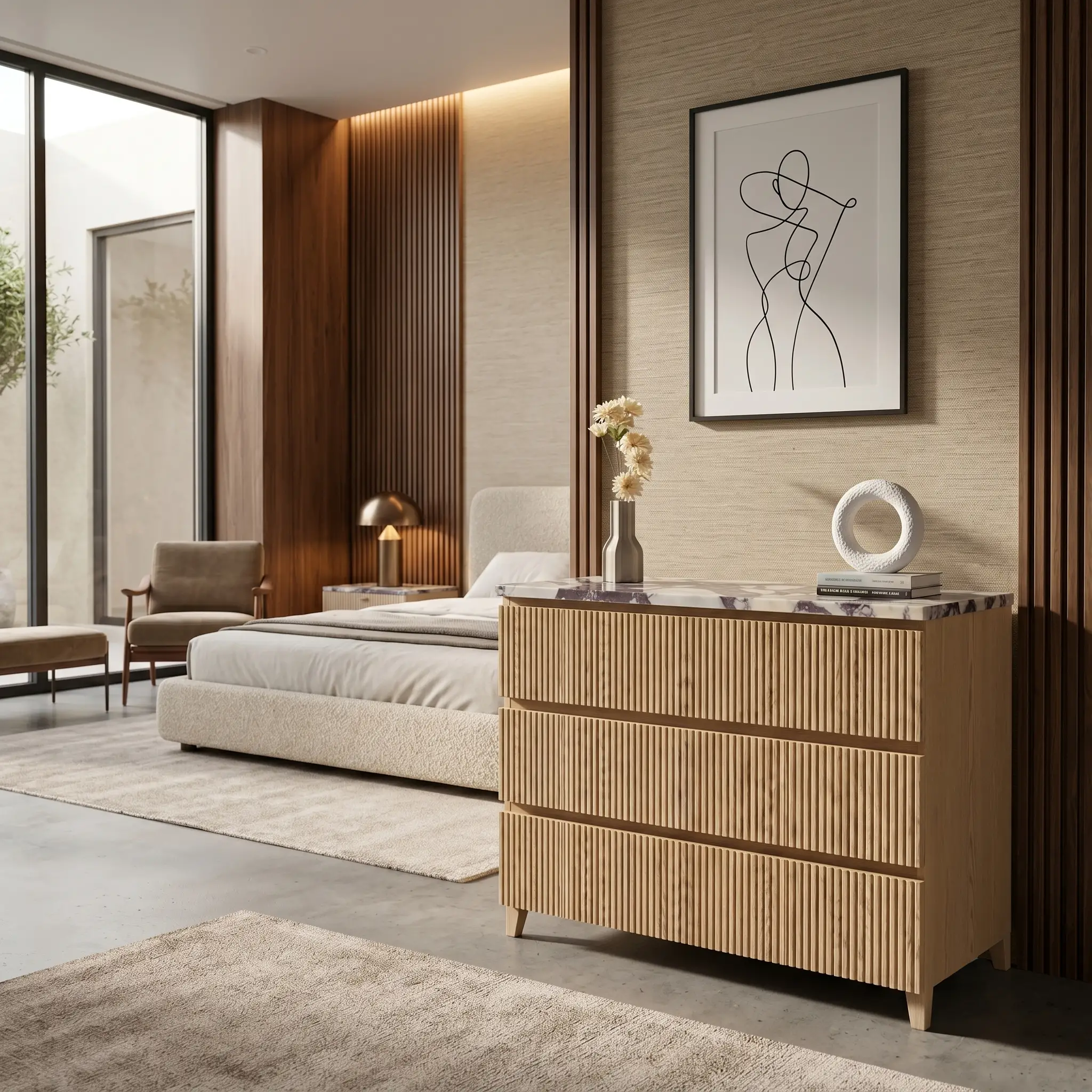
A luxurious bedroom is rarely defined by how many expensive pieces it contains. The difference usually comes down to how thoughtfully the room has been planned. Furniture proportions, circulation space, materials, lighting, colour, and everyday functionality all contribute to how the finished bedroom feels.
A well-planned bedroom should feel comfortable when you use it and visually composed when you walk into it. The bed needs enough breathing room, bedside furniture should be practical without feeling bulky, and dressing areas should support daily routines without creating clutter.
This complete luxury bedroom planning guide takes you through the process from defining how the room will be used to selecting furniture, materials, finishes, and lighting. The aim is to help you create a bedroom that feels refined while remaining comfortable and functional.
What Defines a Luxury Bedroom?
Luxury bedroom planning begins with understanding that luxury is a combination of proportion, quality, comfort, functionality, and visual balance. A large bed placed in a poorly planned room will not necessarily create a luxurious interior. Similarly, a room filled with decorative furniture can feel crowded rather than sophisticated.
The strongest luxury bedroom interiors usually have a clear relationship between the room’s architecture and its furniture. The bed establishes the visual centre, while side tables, dressing tables, mirrors, seating, and storage pieces support how the room is used.
Materials also influence the character of the space. Upholstered furniture can introduce softness, marble adds visual weight and contrast, and wood brings warmth. Rather than using one material throughout, combining finishes thoughtfully can create greater depth.
This approach is particularly useful when planning with luxury bedroom furniture, because individual pieces need to work together without making the room look overly coordinated.
Start With How You Want the Bedroom to Function
Before thinking about finishes or furniture styles, consider what you actually need the bedroom to accommodate. A primary bedroom used mainly for sleeping requires a different furniture plan from one that also includes dressing, reading, working, or lounging.
Rest and Relaxation
The bed should remain the primary focus if rest is the room’s main purpose. Give it sufficient clearance on the accessible sides and avoid placing unnecessary furniture around it.
If space allows, a small lounge chair, bench, or occasional table can create a secondary area for relaxing without interfering with the sleeping zone.
Dressing and Daily Routine
If the bedroom also functions as a dressing area, determine where you will get ready each day. A dressing table should have enough surrounding space to sit comfortably, access drawers, and move between the dressing area and wardrobe.
A dressing table with an appropriately sized mirror can also create a defined preparation zone instead of spreading personal items across bedside or storage furniture.
Reading, Working, and Flexible Use
Some bedrooms need to accommodate activities beyond sleeping and dressing. A reading chair, compact desk, or small occasional table can create a useful secondary zone.
The important consideration is separation. A working area should not visually overwhelm the sleeping zone, particularly in a modern luxury bedroom where a clean, uncluttered appearance is often part of the design.
Plan the Bedroom Layout Before Selecting Furniture
One of the most important principles in bedroom furniture planning is to determine where furniture will go before choosing individual pieces. This prevents a common problem: purchasing beautiful furniture that does not work comfortably within the room.
Establishing Furniture Zones
Think of the bedroom as a series of functional zones rather than one open space.
The sleeping zone centres around the bed and side tables. The dressing zone can include a dressing table and mirror, while a seating or working zone can occupy an unused corner if the room allows.
This approach makes it easier to determine which pieces are essential and which ones would simply add visual clutter.
Maintaining Comfortable Circulation
Furniture should leave enough space for natural movement. Consider how you enter the room, open wardrobe doors, sit at a dressing table, get into bed, and move between different areas.
A useful layout is one where these movements feel intuitive. You should not have to walk around furniture or squeeze between pieces simply because there was space to fit another item.
Identifying Focal Points
Most bedrooms benefit from having one clear visual anchor. In many cases, this is the bed and its headboard.
Other strong architectural features, such as a large window, textured wall, artwork, or statement lighting, can also influence the layout. Furniture should reinforce these features rather than compete with them.
Choose the Bed First as the Anchor Piece
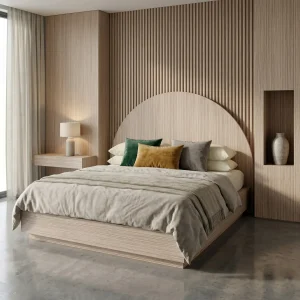
Once the basic layout is established, select the bed before building the rest of the room around it. As the largest piece of bedroom furniture, the bed has a major influence on scale, circulation, and visual hierarchy.
Selecting the Right Bed Scale
The right bed size depends on both the room dimensions and the amount of space needed around it. A king-size bed may suit a large primary bedroom, while a smaller room may require a more proportionate design.
Pay attention to the complete footprint rather than the mattress size alone. A substantial headboard or extended frame can significantly increase the visual and physical space occupied by the bed.
Choosing Bed Shapes and Profiles
The profile of the bed can influence the entire design direction.
Upholstered beds tend to create a softer, more comfortable appearance, while beds with clean geometric lines can support a contemporary interior. Marble, wood, or mixed-material details can introduce additional character.
For a refined room, focus on a bed with strong proportions and a profile that complements the architecture rather than choosing a design simply because it is visually dramatic.
Matching the Bed With the Room Layout
Position the bed where it has enough visual presence without restricting movement. If possible, avoid placing it where doors, wardrobes, or windows create awkward conflicts.
Once the bed position is confirmed, the placement of supporting furniture becomes much easier.
Build Around the Bed With Supporting Furniture
With the bed established as the anchor, supporting furniture can be introduced according to actual needs. These pieces should complement the bed in scale and finish while providing useful surfaces and storage.
Side Tables for Balance and Function
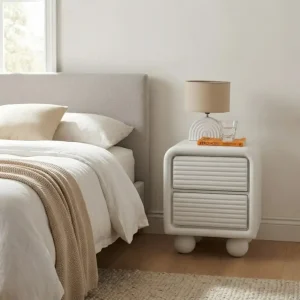
Side tables perform a simple but important role. They provide space for bedside lighting, books, personal items, and everyday essentials while visually balancing the bed.
They do not necessarily have to be identical. Matching side tables create symmetry, while carefully selected complementary pieces can make the bedroom feel more layered.
Dressing Tables for Daily Use
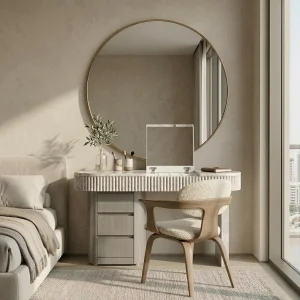
A dressing table should be selected based on how it will be used rather than simply how it looks. Consider its width, storage requirements, seating position, and relationship with the mirror.
In smaller bedrooms, a streamlined design can provide the necessary function without making the dressing area feel heavy.
Mirrors for Visual Expansion
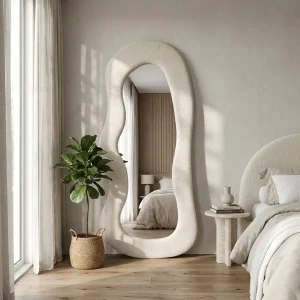
Bedroom mirrors can help reflect light and create a greater sense of visual openness. Their size and placement matter, however. A mirror that is too small can look disconnected from the furniture, while an oversized mirror can dominate the wall.
Use the dressing table, wall dimensions, and available natural light as reference points when deciding on the right size.
Select Furniture Materials That Define Luxury
Materials have a significant influence on how bedroom furniture looks and feels. Instead of selecting every piece independently, establish a material palette and repeat selected finishes throughout the room.
Upholstery for Comfort
Upholstered beds, benches, and occasional seating can soften the appearance of a bedroom. Bouclé, velvet, linen-look fabrics, and other tactile finishes can introduce texture while making larger furniture pieces feel more comfortable.
The key is to balance tactile materials with harder surfaces so the room does not become visually flat.
Marble for Contrast and Sophistication
Marble introduces natural variation, veining, and visual weight. It works particularly well on side tables, dressing tables, consoles, and occasional furniture.
Because marble can become a strong focal material, it is often more effective to use it selectively rather than covering every surface with it.
Wood Finishes for Warmth
Wood helps balance cooler materials such as marble and metal. Different stains and finishes can shift the character of the room from contemporary to more traditional or earthy.
For premium bedroom furniture, wood can be particularly effective when paired with neutral upholstery or stone surfaces.
Choose a Bedroom Color and Finish Strategy
Colour should be considered alongside furniture finishes rather than as a separate decision. The right combination can make a room feel calm, dramatic, warm, or contemporary.
Neutral and Calm Bedrooms
Cream, beige, taupe, soft grey, and warm white create a quiet foundation for luxury bedroom interiors. These colours work particularly well with upholstered beds, natural wood, and subtle stone finishes.
Instead of relying on one shade, layer similar tones through furniture, walls, textiles, and accessories.
Dark Luxury Bedrooms
Deep brown, charcoal, navy, and other darker shades can create a more intimate atmosphere. When using dark colours, introduce variation through texture and reflective materials.
A dark upholstered bed paired with lighter marble or metallic accents can prevent the room from appearing visually heavy.
Earthy and Layered Interiors
Earth-inspired palettes use shades such as sand, tan, brown, muted green, and warm stone. These colours pair naturally with wood and textured upholstery.
This approach works particularly well when the aim is to create a bedroom that feels sophisticated without appearing overly formal.
Using Furniture to Introduce Contrast
Furniture can provide contrast without requiring bold wall colours. A darker side table against a light wall, a marble surface beside warm wood, or an upholstered bed against a textured backdrop can create visual definition.
Layer Furniture to Create a Luxury Look
A successful bedroom usually contains several furniture layers rather than a group of unrelated pieces.
Anchor Furniture
The bed is usually the anchor piece. Its scale, shape, and material establish the direction for the rest of the room.
Supporting Furniture
Side tables, dressing tables, cabinets, benches, and other functional pieces should support the anchor without competing with it.
Accent and Reflective Pieces
Mirrors, occasional tables, metallic details, and carefully selected accent furniture can introduce variation and reflect light.
This layered approach allows a luxury bedroom collection to feel coordinated without requiring every piece to come from the same matching set.
Lighting and Furniture Placement Principles
Furniture and lighting should be planned together. A beautifully furnished bedroom can still feel uncomfortable if key areas are poorly illuminated.
Ambient Lighting
Ambient lighting establishes the overall brightness of the room. Ceiling fixtures, recessed lighting, and indirect lighting can create an even foundation.
The light should complement the room’s finishes. Highly reflective surfaces can behave differently under strong lighting than matte upholstery or natural wood.
Functional Lighting Around Furniture
Bedside lighting should provide enough illumination for reading without overwhelming the sleeping area. Similarly, the dressing zone needs clear, useful lighting around the mirror.
Place lighting where it supports the activity associated with each furniture zone.
Creating Visual Balance
Lighting can also help balance the composition of the room. Matching bedside lights create symmetry, while a statement pendant or wall light can reinforce the bed as the focal point.
Think of lighting as part of the furniture arrangement rather than something added after the furniture has been selected.
Conclusion
A well-designed bedroom starts with planning rather than purchasing. Define how the room needs to function, establish its zones, position the bed, and then build around it with supporting furniture. From there, materials, colours, proportions, mirrors, and lighting can be layered to create a cohesive interior.
The best luxury bedroom design ideas are ultimately those that make the room feel effortless to use. Furniture should have enough space around it, materials should work together, and every significant piece should contribute to either comfort, function, or visual balance.
For homeowners exploring bedroom furniture in Dubai, UAE, Lamac offers bedroom furniture designed to bring together considered proportions, distinctive materials, and contemporary design. Explore Lamac’s bedroom range to find pieces that can form the foundation of a thoughtfully planned luxury bedroom.
FAQs
1. How do you plan a luxury bedroom?
Start by defining how the bedroom will be used, then establish functional zones and determine the bed position. Select the bed as the anchor piece before adding side tables, dressing furniture, mirrors, storage, and other supporting pieces. Finish by coordinating materials, colours, proportions, and lighting.
2. What furniture is essential in a luxury bedroom?
The essential pieces depend on the room and its intended use. A bed and bedside tables form the basic sleeping zone, while dressing tables, mirrors, storage furniture, seating, or additional accent pieces can be added according to available space and daily requirements.
3. How large should bedroom furniture be?
Furniture should be proportionate to both the bedroom and the surrounding pieces. Measure the available floor area and maintain comfortable circulation before selecting large furniture such as beds, wardrobes, dressing tables, or cabinets.
4. Should bedroom furniture match?
Bedroom furniture does not have to be identical. Coordinating colours, materials, shapes, and proportions can create a cohesive appearance while allowing different pieces to add visual interest.
5. What materials make a bedroom look luxurious?
Upholstery, marble, natural wood, metal, and glass can all contribute to a luxurious bedroom. The overall effect depends on how these materials are combined rather than on using one particular material throughout the room.
6. How many furniture pieces should a bedroom have?
There is no fixed number. The right amount depends on the room size and how it will be used. Prioritise essential furniture first and add secondary pieces only when there is enough space to maintain comfortable circulation.
Leave a Comment
Your email address will not be published. Required fields are marked *
You must be logged in to post a comment.